


Italy, horticulture: +11.8% businesses, +13.6% employment
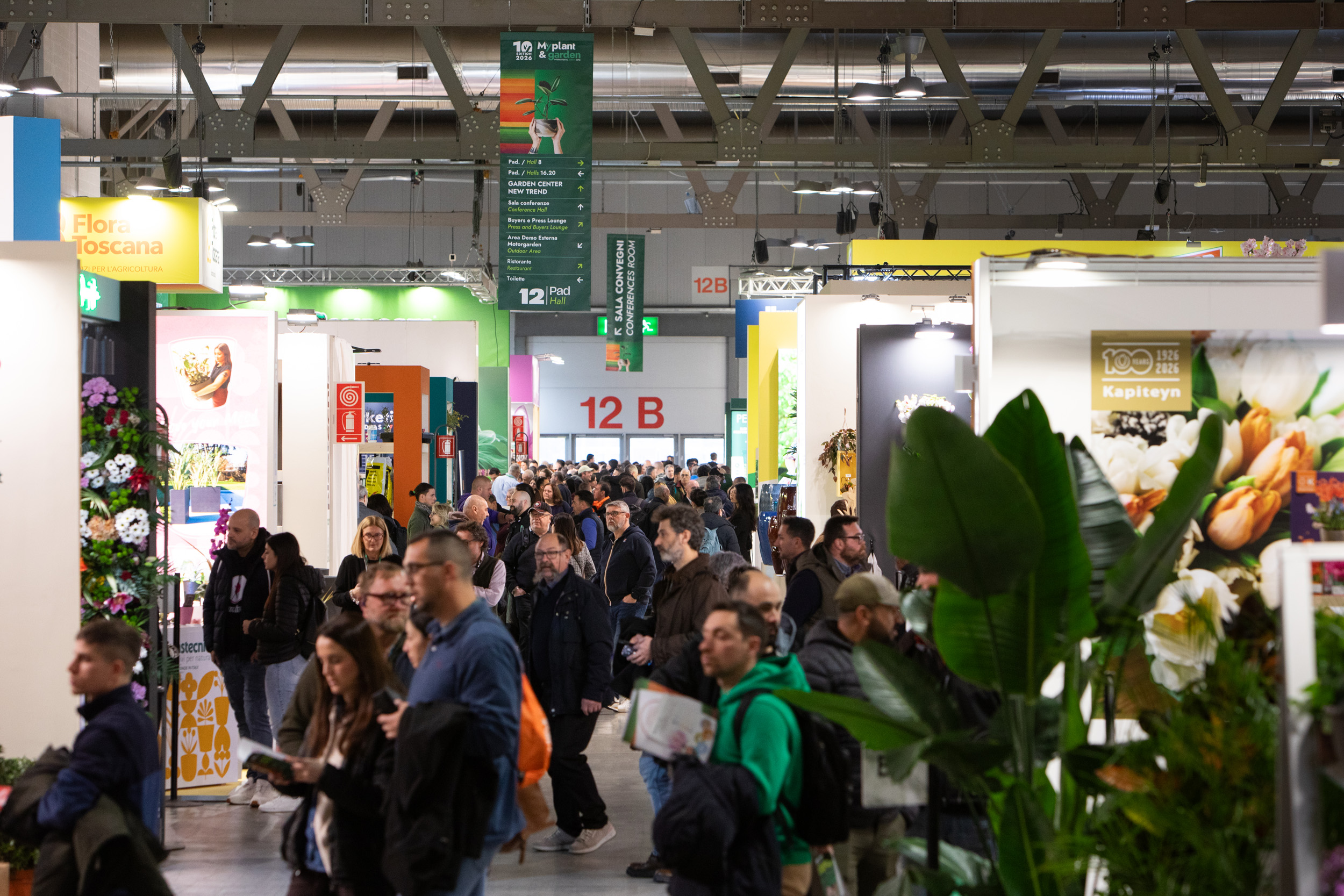
Italy’s floriculture and nursery sector continues to grow, creating jobs and strengthening its historic production districts while new areas of development emerge. This is highlighted by the analysis carried out by Myplant & Garden, the leading international trade fair dedicated to green industry professionals, scheduled to take place at Fiera Milano Rho (IT) from 17 to 19 February 2027.
The study, based on data processed from Istat and the Chambers of Commerce, provides a snapshot of a sector undergoing transformation. In 2023, Italy’s floriculture and nursery industry covered nearly 39,000 hectares across more than 29,000 agricultural businesses. Compared with 2010, there has been a slight reduction in cultivated land, offset by an increase in the number of businesses, resulting in a decrease in the average size of each holding.
Considering the entire supply chain – production, processing and marketing – the sector will comprise around 38,000 businesses and more than 84,000 employees in 2025. Between 2024 and 2025, the number of businesses increased by 11.8% and employment by 13.6%, with growth driven mainly by floriculture and retail trade, while wholesale is the only segment to record a decline.
The industry’s structure continues to consist predominantly of small businesses, with an average of 2.2 employees per company, while the nursery sector remains the most structured segment, with an average of 4.4 employees per business.
At the regional level, Tuscany ranks first in both the number of businesses and cultivated area, while Emilia-Romagna stands out for the highest employment intensity. Floriculture is the most dynamic segment, recording growth of 7.3% in the number of businesses and 20.2% in employment over the past year. Liguria maintains its national leadership, followed by Lombardy, Campania and Tuscany.
Retail trade also continues to expand, reaching more than 18,000 businesses and 24,000 employees, with Lombardy ranking first for both the number of retail outlets and employment. Wholesale trade, by contrast, recorded a slight decline in both the number of businesses and employment in 2025.
Overall, Lombardy, Campania and Tuscany account for the highest number of businesses across the supply chain. Lombardy confirms its position as the country’s leading hub, with nearly 4,900 businesses and more than 10,700 employees, while Tuscany and Veneto follow in terms of employment.
Finally, the analysis highlights that employment growth is also extending to emerging regions: Friuli-Venezia Giulia and Calabria recorded the highest percentage increases, confirming a sector that continues to evolve and strengthen its role in agriculture, the economy, and policies for sustainability and climate adaptation.